


It’s the holy month of Ramadan, when Muslims around the world dedicate 30 days to prayer and reflection by fasting from sunrise to sunset.
At the Islamic Society of Monterey County in Seaside, worshippers gather on Fridays and Saturdays for a communal iftar, a meal Muslims eat at sunset to break their daily fast.
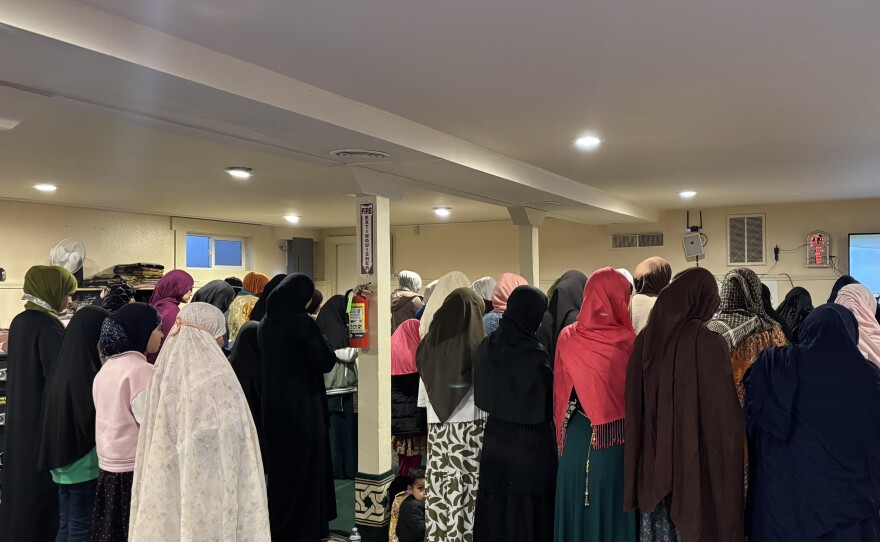
The men and women pray and eat in separate rooms. In the women’s room, on a Friday evening, mothers calmly asked their excited children to quiet down for prayer.
After the prayer, worshippers broke the fast with a light snack of dates and samosas. Pebble Beach resident Seynabou Seck said going twelve hours without food is always a chance for self-reflection.
“ I feel like there's almost a cleansing aspect,” Seck said. “It's not just not eating and not drinking, but I haven't been watching reality TV, which is usually my guilty pleasure."
And, it’s not only spiritual. The communal gathering this evening also brings a bit of nostalgia for Seck, who is from Senegal. At home, she says, "it's very community-driven. We eat and gather often.”
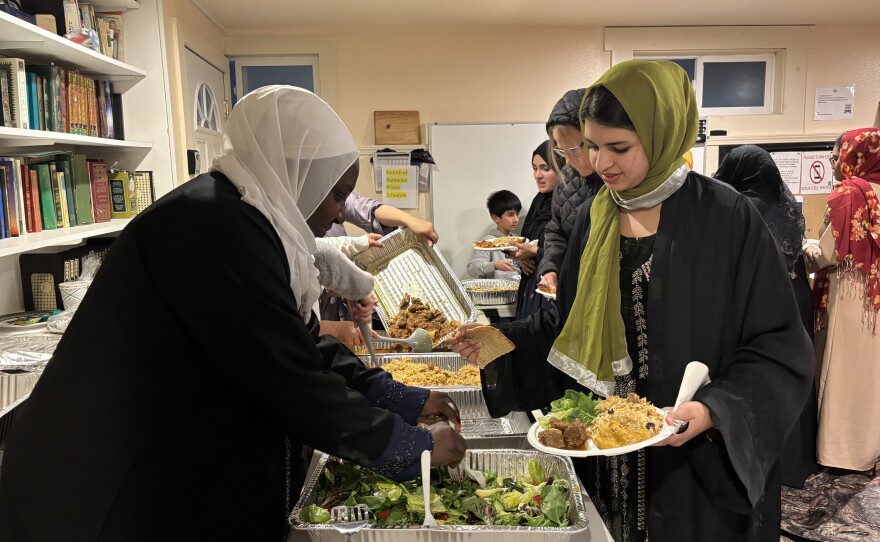
After the snacks, worshippers stand in line to get their iftar dinner. Every Friday and Saturday, various groups like Indonesians and Moroccans take turns to cook a feast for the worshippers. Tonight, it was the Afghan community’s turn.
“This is special Afghan rice. It's called Kabuli pulao,” said Bibi Masouda, who helped prepare this evening’s meal, explaining what’s on the menu.
There are also trays of lamb stew, chicken curry with potatoes, grilled chicken, salad, and pizza for the kids, who aren't required to fast.
" Sister, are you going to eat?" A concerned worshipper, Mariam Alao, noticed me trying to balance my recording kit and phone camera, and offered to get me a plate of pulao with all the fixings.
As people settle to eat, high school student Tana Haddid shared what breaking the fast with others means for her.

”Something that I really appreciate is how all of our cultures mix really well. We have a lot of Afghans, Persians, Arabs, Moroccans, Egyptians, people from all walks of life and different ages,” Haddid said. “But we can all come together and share the fact that we are all Muslim, and share each other's culture and experiences."
As the night went on, dishes were emptied and bellies were filled. The kids started to doze off as their parents wrapped up the evening meal and conversations.
The next day, Muslims will begin the fast again, as they continue this 30-day period of faith and reflection.
“Ramadan is about focusing more on what matters. Not only food and such, but of time, of energy, of focus,” Seck said.
Editor's note: at the request of some members of the Islamic Society of Monterey County, KAZU has removed one previously published photo from this story.
