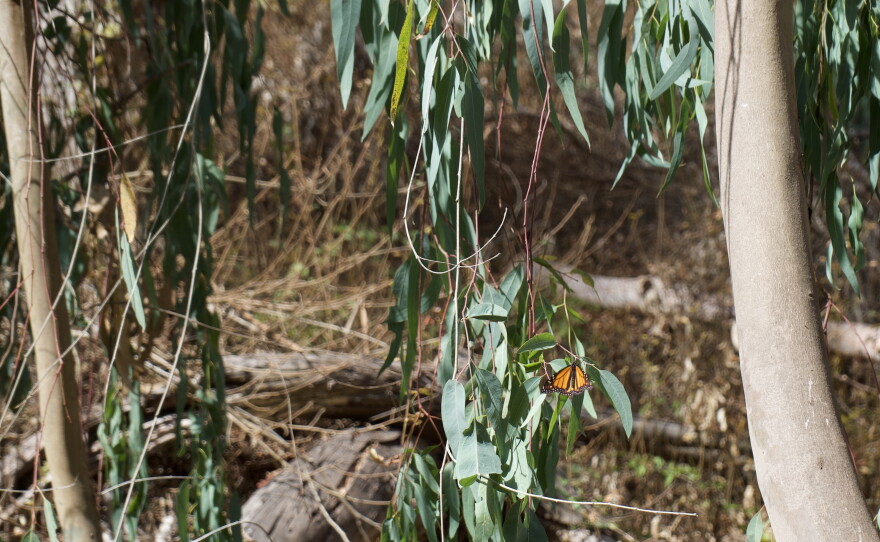
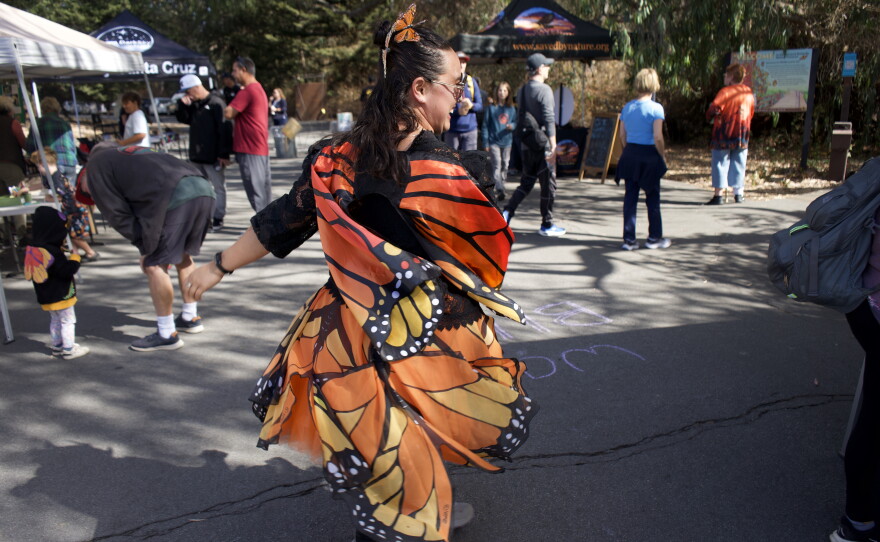
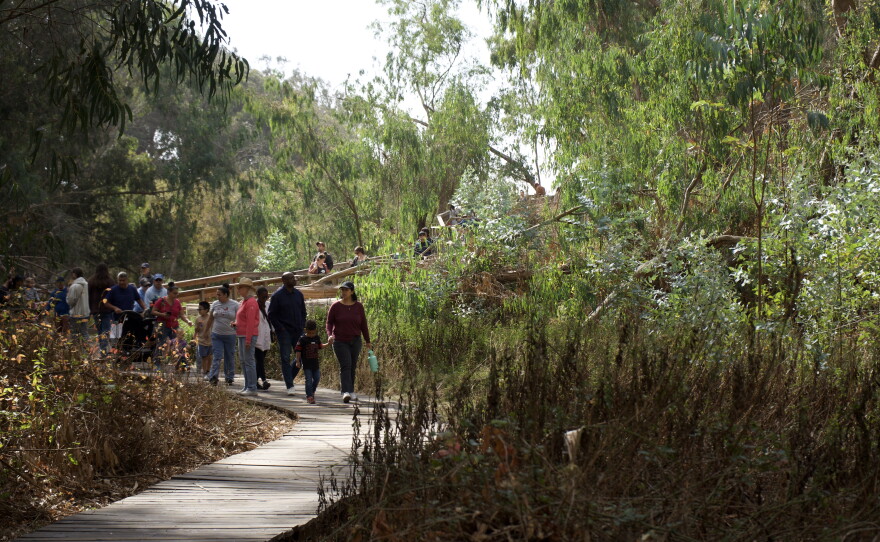
Every October, Natural Bridges State Beach in Santa Cruz hosts a festival to welcome the return of the monarch butterflies. Monarchs spend winter months at protective groves on the coast, including at Natural Bridges.
"They pick the overwintering sites that they do partly for wind protection," said Rhiannon Sims with the Santa Cruz District of California State Parks. "But if we have a big storm that comes through, sometimes even being in the grove isn't enough to protect them."
It’s not clear how this year’s El Niño will play out.
"We're concerned that this winter could damage groves, result in more monarch mortality than we've seen in past seasons," said Isis Howard, a conservation biologist at the Xerces Society
The monarch population is already dealing with a steep decline. Kirk Crane volunteers as a docent at Natural Bridges. He remembers when the overwintering population at the park was much larger.
"We had 120,000 in 1997," said Crane. "You'd go through that grove down there, and they would just be roped with huge clusters the size of you and me."
Last year, counts put the population of Western Monarchs at around 11,000 across 250 sites in California.
For those who want to help monarchs, protecting habitats, cutting out pesticides and participating in citizen science projects are good places to start.